
The Cost of Waiting: A Decision Rule for Egypt’s Wheat Buyers
How inventory coverage, changing freight rates and delivery deadlines determine the right time to buy.
BITAR GLOBAL TRADE | Market Intelligence | 14 October 2026
For an Egyptian flour mill, waiting for a better wheat price is not a cost-free decision. Every additional week changes the relationship between inventory coverage, shipment timing and the price the mill may ultimately pay.
The critical question is not whether freight will become cheaper. It is whether the expected saving justifies the risk of receiving wheat too late.
BITAR GLOBAL TRADE examines this decision through two measurable thresholds: the price advantage required to justify waiting, and the last date a mill can safely postpone its purchase.
Give waiting a deadline
Start with the mill, not the freight market. Calculate usable, uncommitted wheat inventory divided by daily consumption. Map reliable incoming cargoes against consumption dates. Expected vessel arrival is not wheat availability: discharge, clearance and inland delivery must fit before the mill needs the grain.
| Decision input | What the buyer must establish |
|---|---|
| Days of usable inventory | Stock actually available for the planned milling programme—not total warehouse tonnage |
| Reliable replenishment lead time | Time from purchase commitment to usable wheat at the mill, including contracting, loading, voyage and delivery |
| Maximum acceptable waiting period | Inventory cover remaining after replenishment lead time and an explicit contingency allowance |
For a simplified case with steady consumption and no intervening replenishment:
Maximum waiting period = inventory cover − replenishment lead time − contingency allowance.
With 45 days of usable cover, a 30-day replenishment lead time and a five-day contingency, the purchasing window is 10 days—not 45. These are illustrative assumptions, not reported conditions at an Egyptian mill. A zero or negative result signals a need to assess immediate or bridging supply, not permission to wait.
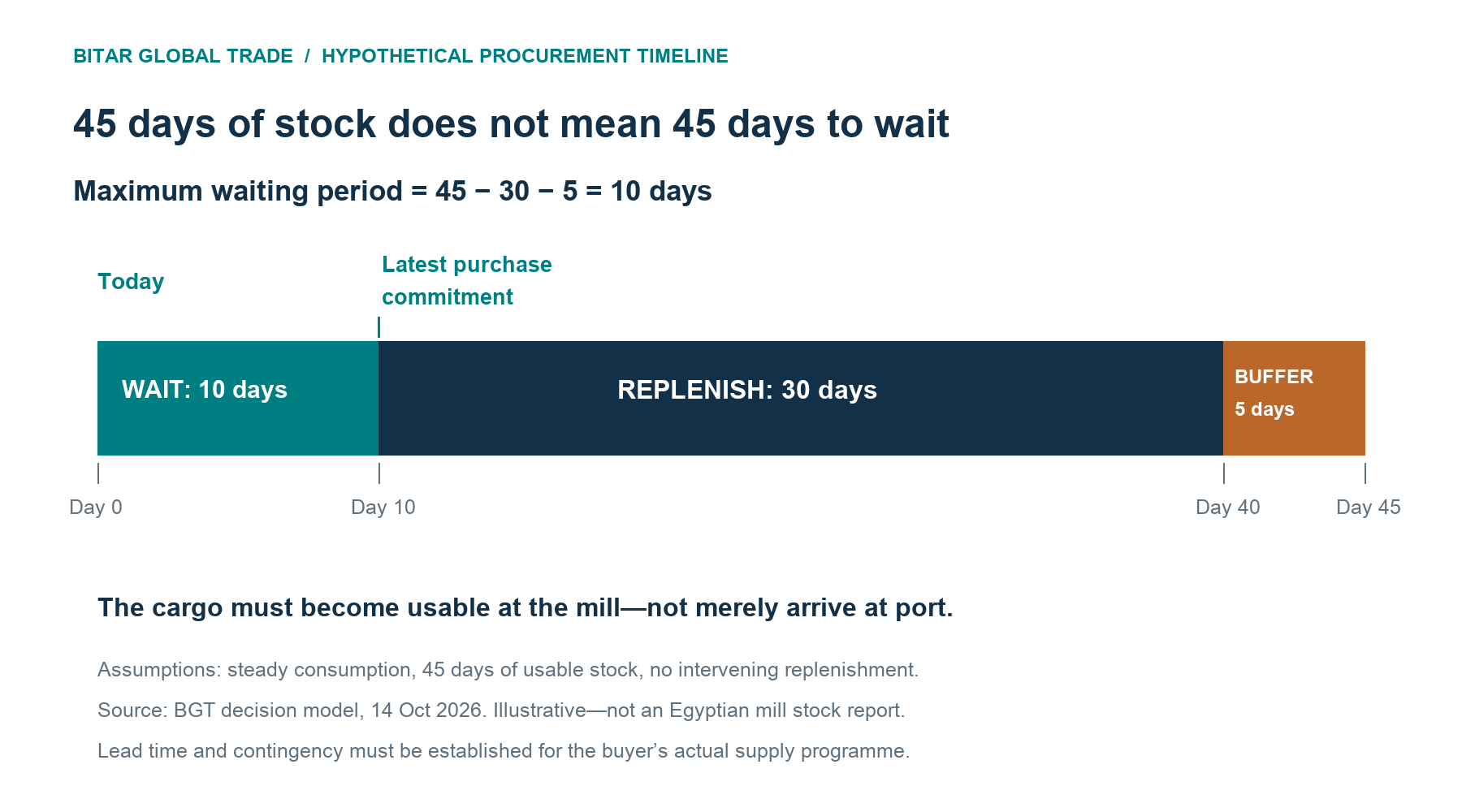
Figure 1. BGT illustration. Recalculate for actual consumption, incoming cargoes and changing lead times.
Market context—not a blanket instruction to buy
Russian wheat port shipments to Egypt fell from 633,500 to 86,500 tonnes year-on-year during 1–10 October, according to Russian Grain Union monitoring reported on 12 October. The calculated decline is 86.3%, but export shipments do not establish an individual mill’s stock position. Interfax/RGU.
Price signals are mixed: ProZerno monitoring reported on 13 October showed the previous week’s calculated Novorossiysk FOB price down $5/tonne, while Vysotsk FOB rose $2. These are market references, not matched executable offers. Waiting can still pay. Interfax/ProZerno.
Check the calendar behind the price
Fastmarkets’ new Russian Baltic wheat methodology changes its reference loading month on the 16th. Its Baltic–Egypt freight assessment instead covers loading within the following 30 days. Fastmarkets pricing notice, 12 October.
The October comparison trap
Through 15 October: the wheat reference covers November shipment.
From 16 October: it covers December shipment.
Freight: a rolling 30-day loading period—not automatically the wheat reference month.
BGT inference: adding two recently published numbers can create a misleading delivered-cost comparison. A price change across the rollover may partly reflect a different shipment month, rather than a change in the same cargo’s price.
Match quality, quantity, loading period, discharge port and payment basis. Compare CFR with CFR, or include comparable cargo insurance for CIF. Neither automatically includes all delivered-to-mill costs; do not add war risk twice if freight already includes it.
Put a price on waiting
Only after checking the delivery deadline should the buyer apply this simplified test:
Net benefit of waiting = freight saving − FOB increase − additional execution costs + carrying costs avoided.
All items are differences between buying now and buying later, expressed per tonne. Additional costs may include extra insurance, financing or delay-related expenses. Carrying costs avoided are storage and financing expenses saved by purchasing later. Avoid double counting; a falling FOB price contributes a saving.
Assume a 25,000-tonne purchase, freight falling $8/tonne, additional execution costs of $3/tonne and carrying costs avoided of $1/tonne. Other costs, quality and payment terms remain unchanged. Every assumption is hypothetical—not an October price forecast or quotation.
| Hypothetical FOB increase | Net benefit of waiting | Effect on 25,000 tonnes |
|---|---|---|
| $3/tonne | +$3/tonne | $75,000 saved |
| $6/tonne | $0/tonne | Break-even |
| $10/tonne | −$4/tonne | $100,000 extra cost |
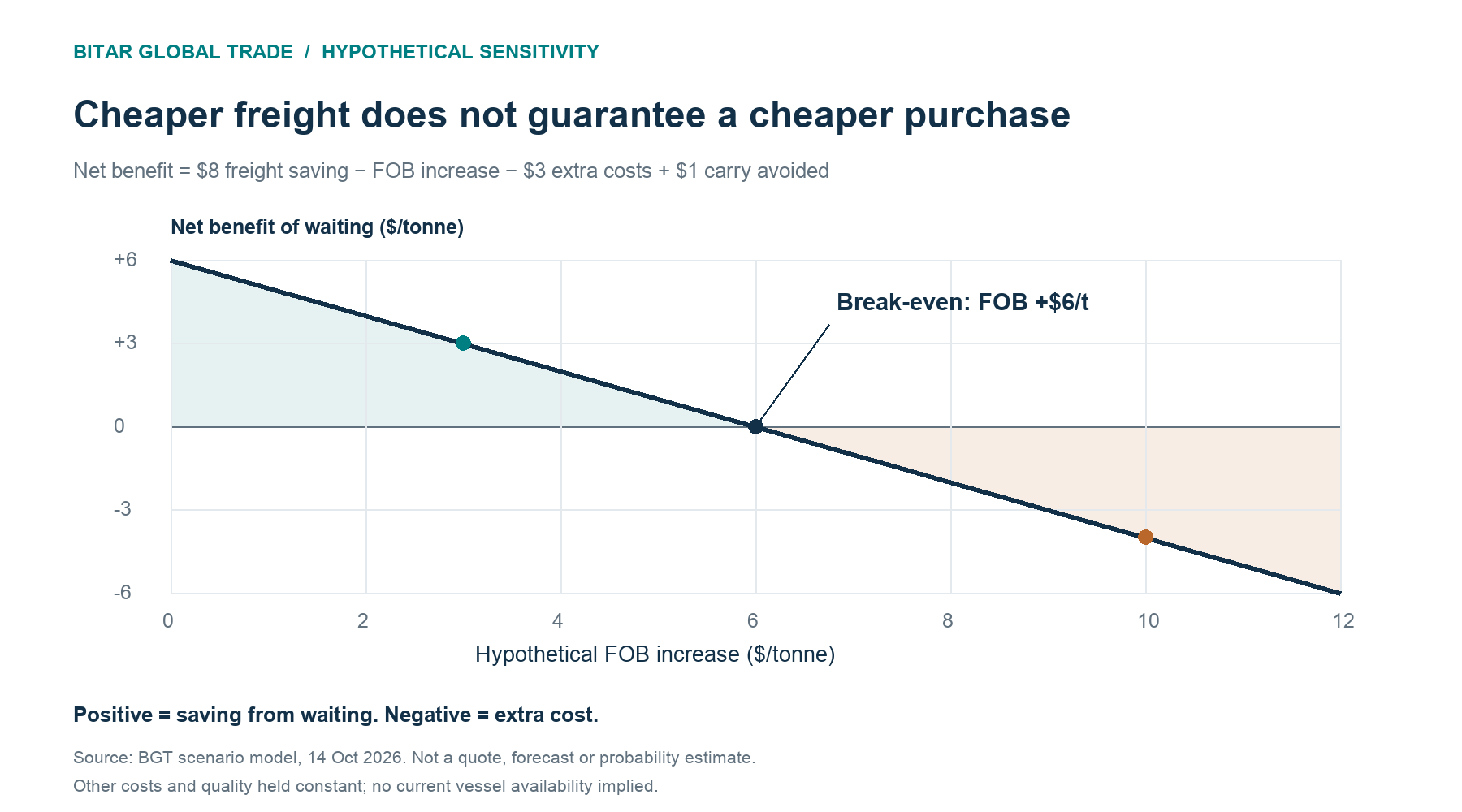
Figure 2. BGT hypothetical sensitivity. Positive values favour waiting; no probabilities are assigned.
The apparent freight saving is $200,000. Yet a $6/tonne grain-price increase absorbs the net benefit under these assumptions.
Critical condition: the deferred cargo must still become usable before the mill’s requirement date. Otherwise, emergency replacement purchases or production interruption can dominate the calculation. Those consequences require a separate downside assessment; they are not assumed covered by the illustrative $3/tonne allowance.
BITAR GLOBAL TRADE View
A buyer with adequate cover and credible alternatives can wait—with a deadline and a minimum saving target. A buyer close to its replenishment limit should assess essential near-term coverage first. Splitting purchases can preserve flexibility, but smaller parcels and extra port calls may raise costs.
The decision rule is straightforward: waiting must pass both the delivery test and the cost test. Refresh the calculation when inventory, lead time, grain price or freight changes. A cheaper freight rate is not necessarily a cheaper purchasing decision.
Request a Sourcing Review
Egyptian mills and importers can request a BITAR GLOBAL TRADE sourcing review based on delivered economics and required timing. Share your company and purchasing role, wheat specification, quantity, destination port, required arrival period and proposed payment terms. Indicate FOB, CFR or CIF and, where appropriate, remaining stock cover. Any sourcing proposal remains subject to current availability, counterparty checks and agreed terms.
Methodology: Market observations are dated and attributed above. Decision rules and hypothetical models are BGT analysis, not executable offers. No buyer stock position, vessel availability or future price path is asserted.